
Introduction to Vocational Education
Vocational education refers to training within vocational institutions that prepares individuals for specific trades. It develops expertise in practical techniques related to technology, skill acquisition, and scientific application—covering every aspect of the chosen trade.
Vocational education can occur at the secondary, post-secondary, further education, or higher education levels. It often closely interacts with the apprenticeship system. Increasingly, vocational education is recognized through prior learning assessment and may count as partial academic credit toward tertiary education.
As the labour market becomes more specialized and demands higher technical skills, governments and businesses continue to invest in vocational education—supporting it through publicly funded training organizations and subsidized apprenticeship or traineeship programs. At the post-secondary level, vocational education is typically offered by institutes of technology, polytechnics, universities, or community colleges.
The Role of the National Board for Technical Education (NBTE)
The National Board for Technical Education is a major organ of the Federal Ministry of Education, specifically created to manage all aspects of Technical and Vocational Education outside the university system. It was established by Act No. 9 of January 11, 1977.
In addition to providing standardized minimum guide curricula for Technical and Vocational Education and Training (TVET), the Board supervises and regulates programs in technical institutions at both secondary and post-secondary levels through accreditation. It also participates in the funding of government-owned polytechnics in Nigeria.
Vision:
To promote quality Technical and Vocational Education and Training (TVET) for sustainable development, economic growth, and Nigeria’s leadership role in African and global affairs.
Mission:
To promote the production of skilled and semi-skilled manpower that will revitalize and sustain the national economy, reduce unemployment and poverty, and enhance TVET through quality assurance tools, reliable data for planning, strategic funding, and strong linkages between institutions and industry.
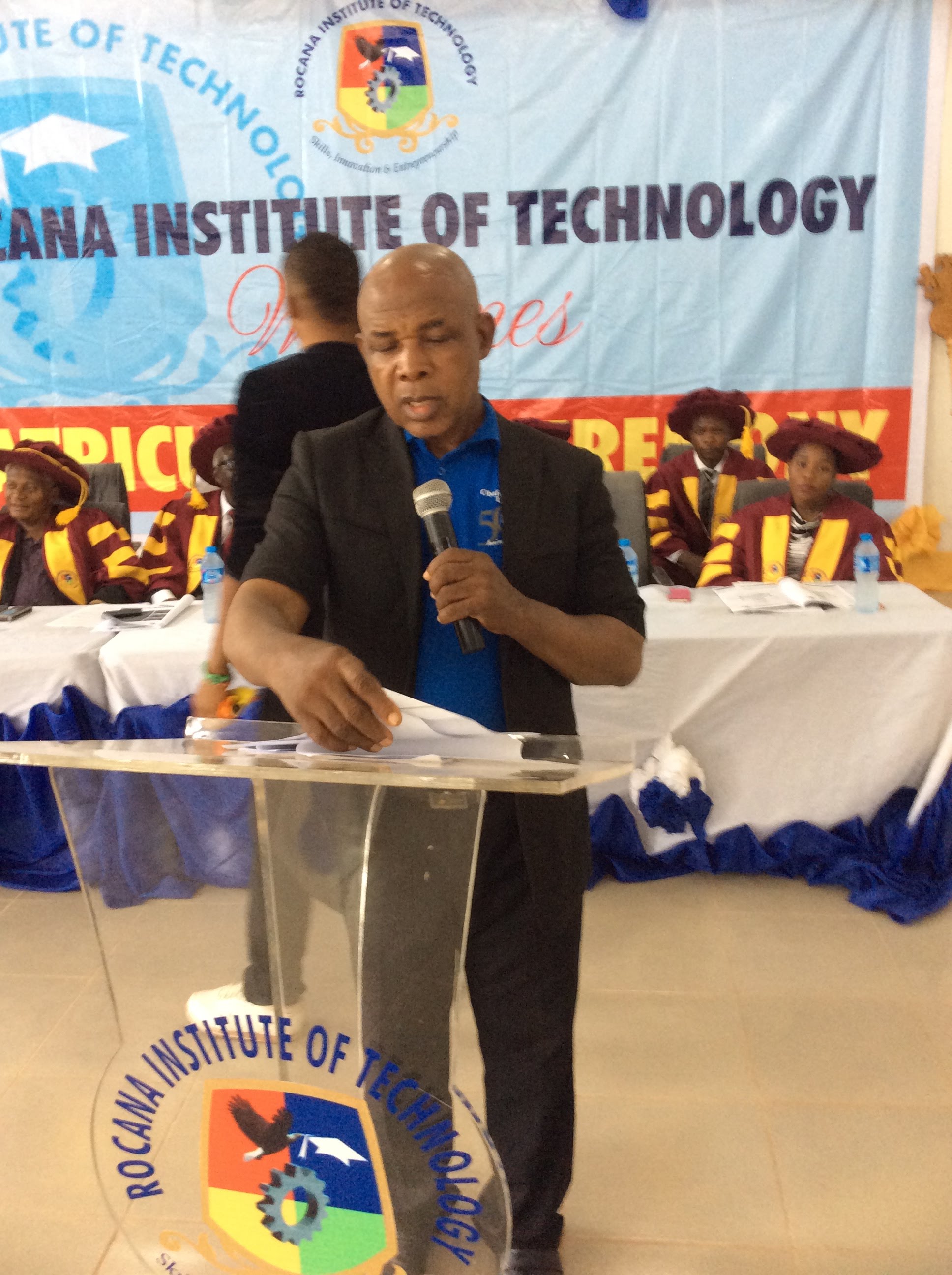
ROCANA Institute of Technology
Today marks the beginning of your upliftment in your chosen career. You are warmly welcome.
The aim of this Institute is to create access to technical education and skill development—empowering youths and citizens with abilities needed for wealth creation and self-reliance, while also providing an alternative route to tertiary education.
At this moment, millions of young people around the world are deciding their next steps in life. Regardless of their grades, they have the chance to shape their futures. To do this, they must be aware of all available options.
Research shows that many young people (62%) already have an idea of their dream job. Yet a significant number are still unsure of the path to follow.
In the past, vocational education was considered an option only for those who were not “academic.” Those with strong grades proceeded to A-levels and university, while others went directly into work or vocational programs.
Let me correct that misconception.
The term “vocational” means “work-related.”
A vocational qualification does not imply a lack of academic ability. It simply means learning practical skills and acquiring the knowledge required to perform a specific job. It is not an easier alternative—it is a focused path toward mastery.
Many people are unaware that vocational qualifications can reach the same level as a university degree. With vocational training, students often enter the workforce earlier, gain experience sooner, and begin earning immediately—without the financial burden associated with longer academic routes.
—Dick Winterton, Managing Director of City & Guilds Awards
Benefits of Vocational Training
1. Practical Skills
Vocational training focuses on hands-on skills that can be applied immediately. Programs prepare students for real-world tasks in fields such as auto maintenance, carpentry, and medical assistance. Because the training is specific, graduates often secure employment faster than those with general academic backgrounds.
2. Shorter Time Frame
Many vocational programs allow students to enter the workforce much sooner than traditional academic routes. Technical colleges and polytechnics often offer programs that can be completed in two years or less. Entering the workforce earlier allows students to begin earning and gaining experience sooner.
3. Lower Cost
Vocational programs are generally less expensive than lengthy university programs. They result in less debt and greater financial flexibility.
4. Adapted Learning Style
Different students learn in different ways. Vocational training emphasizes hands-on learning, experimentation, and practical experience—ideal for those who thrive through active learning rather than theoretical study.
The Printing Practitioner
We, members of the Society of Printing Practitioners of Nigeria (SPPN), are here today to congratulate you on your admission into the fields of Printing, Multimedia, and Computer Software. We encourage you as future professionals and practitioners.
As you begin this journey, know that we are committed to guiding you in your chosen career. By becoming student members of our noble Association, you will gain exposure, mentorship, and insight into the vast world of printing.
Thank you.